
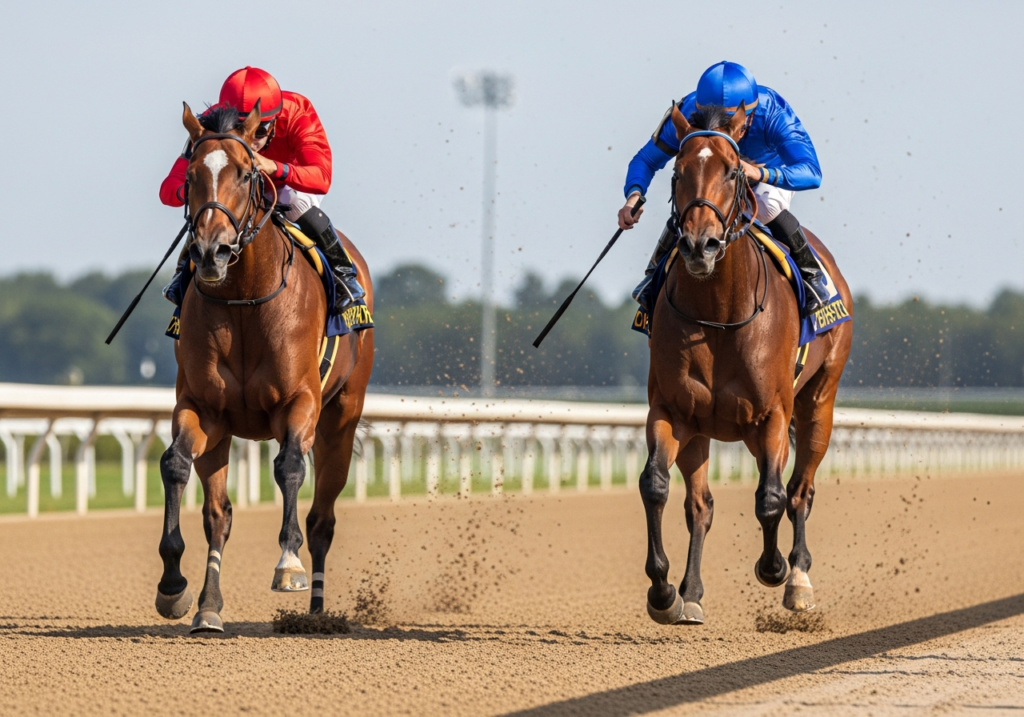
Horse racing exacta betting represents one of the most popular exotic wager types at US tracks, offering bettors the opportunity to predict the first two finishers in exact order. As we move into 2026, exacta betting continues to evolve with enhanced wagering options and innovative pool structures that cater to both novice and experienced handicappers.
The exacta bet requires selecting which horses will finish first and second in a specific race, making it more challenging than win, place, or show bets but more achievable than trifectas or superfectas. This betting format strikes an ideal balance between difficulty and potential payouts, explaining its enduring popularity across major racing circuits including Churchill Downs, Belmont Park, and Santa Anita.
Understanding the various exacta bet types and their strategic applications can significantly improve your success rate and return on investment. From straight exacta bets to complex wheeling strategies, each approach offers distinct advantages depending on your handicapping analysis and risk tolerance.
Understanding Exacta Betting Fundamentals
Basic Exacta Bet Structure
A straight exacta bet involves selecting two horses to finish first and second in exact order. The minimum bet amount varies by track but typically ranges from $1 to $2 per combination. If your selected horses finish in the predicted order, you win the exacta pool payout minus the track’s takeout percentage.
The payout calculation depends on the total pool size and the number of winning tickets. Popular horses generally produce lower payouts due to higher betting volume, while longshot combinations can yield substantial returns. Track conditions, field size, and race type all influence the potential exacta payouts.
Exacta vs Other Exotic Bets
Exacta bets occupy a unique position in the exotic wagering hierarchy. They’re more accessible than trifecta bets, which require predicting three horses in order, yet offer better payouts than quinella bets, where horses can finish first and second in either order. This positioning makes exactas particularly attractive for bettors seeking moderate risk with solid payout potential.
The hit rate for exacta bets typically ranges from 8% to 15% for experienced handicappers, significantly higher than trifecta or superfecta bets but lower than quinellas. This balance between achievability and profitability explains why exactas remain a cornerstone of exotic wagering strategies at US tracks.
Types of Exacta Bets Available
Straight Exacta Wagers
The straight exacta represents the simplest form of exacta betting, requiring you to select one horse for first place and one horse for second place. This bet wins only if both horses finish in the exact order specified. Straight exactas offer the highest potential payouts per dollar invested since you’re covering only one specific outcome.
Professional handicappers often use straight exacta bets when they have strong convictions about race outcomes. The key to success lies in identifying races where you can confidently predict the top two finishers based on form analysis, pace scenarios, and track conditions.
| Exacta Type | Combinations Covered | Minimum Cost | Hit Rate |
|---|---|---|---|
| Straight | 1 | $2 | 5-8% |
| Box | 2-12 | $4-$24 | 12-25% |
| Wheel | 6-30 | $12-$60 | 15-35% |
| Part Wheel | 3-20 | $6-$40 | 10-20% |
| Key | 4-16 | $8-$32 | 8-18% |
Exacta Box Betting
Exacta box bets allow your selected horses to finish first and second in any order, essentially combining two straight exacta bets into one wager. For example, boxing horses 3 and 7 covers both 3-7 and 7-3 combinations. The minimum cost doubles since you’re purchasing two combinations, but your chances of winning increase significantly.
Box betting proves most effective when you’re confident about which horses will finish in the top two positions but uncertain about the exact order. This strategy works particularly well in competitive races where several horses have legitimate winning chances and pace dynamics could influence the final running order.
Advanced Exacta Strategies
Wheeling and Part-Wheeling
Exacta wheels involve selecting one horse for a specific position (first or second) and combining it with multiple horses in the other position. A full wheel with horse 5 to win would include combinations like 5-1, 5-2, 5-3, covering all other horses in the field for second place. This strategy requires strong confidence in one horse’s ability to finish in a particular position.
Part-wheeling offers more flexibility by using multiple horses in the key position while still limiting your combinations to the most logical contenders. This approach balances cost control with coverage, making it popular among professional handicappers who want exposure to multiple scenarios without betting every possible combination.
Key Horse Strategies
Key horse strategies focus on one or two horses you believe are most likely to hit the board, then surround them with logical contenders. You might key horse 4 on top with horses 1, 6, and 8 underneath, creating three combinations: 4-1, 4-6, and 4-8. This approach requires fewer combinations than full wheels while maintaining reasonable coverage.
Successful key horse strategies depend on accurate pace analysis and understanding each horse’s preferred running style. Early speed horses make excellent keys for the win position in races lacking pace pressure, while strong closers work well as second-position keys when the pace figures to be contested early.
Track-Specific Exacta Considerations
Major US Racing Circuits
Different tracks present unique challenges for exacta betting based on their racing surfaces, typical field sizes, and pool structures. Churchill Downs and Keeneland often feature large fields with competitive exacta pools, creating opportunities for substantial payouts on longshot combinations. The dirt surfaces at these tracks tend to favor speed horses, influencing exacta strategy toward early leaders and prominent runners.
Turf-focused tracks like Belmont Park and Del Mar require different approaches due to the typically more tactical nature of grass racing. Exacta payouts on turf often involve horses making strong late runs, making it essential to identify closers with good turn-of-foot and favorable post positions for their running styles.
Pool Size and Payout Implications
Larger exacta pools generally provide better value for longshot combinations while reducing payouts on heavily bet favorites. Tracks with higher daily handle like Santa Anita and Gulfstream Park offer more predictable payout ranges, making it easier to calculate potential returns and determine optimal bet sizing.
Smaller tracks or less prominent race days can produce volatile exacta pools where one large bet significantly impacts payouts. Understanding pool dynamics helps determine when to target popular combinations versus when to focus on overlooked horses that might provide outsized returns relative to their actual winning probability.
Handicapping for Exacta Success
Pace Analysis and Running Styles
Effective exacta handicapping begins with thorough pace analysis to predict how races will unfold. Identifying likely pace scenarios helps determine which horses will be positioned to finish in the top two spots. Races with minimal early speed often favor horses with tactical speed or good gate positions, while speed-heavy races set up closing types for exacta consideration.
Running style compatibility plays a crucial role in exacta outcomes. Pairing a confirmed front-runner with a strong closer often produces better value than combining horses with similar running styles. Understanding how different running styles interact under various pace scenarios gives handicappers significant advantages in exacta construction.
Value Recognition and Betting Efficiency
Successful exacta betting requires recognizing when combinations offer positive expected value compared to their actual probability of occurring. This involves comparing morning line odds, live odds, and your own probability assessments to identify discrepancies that create betting opportunities.
Betting efficiency focuses on maximizing coverage while minimizing cost, ensuring that your exacta investments provide reasonable returns when successful. Professional handicappers often use structured approaches that prioritize the most likely combinations while including strategic longshot possibilities that could generate significant profits.
Bankroll Management for Exacta Betting
Stake Sizing and Risk Control
Proper stake sizing for exacta bets requires balancing potential returns with your overall bankroll constraints. Most professional bettors recommend risking no more than 2-5% of your bankroll on any single exacta wager, regardless of confidence level. This conservative approach helps preserve capital during inevitable losing streaks while allowing for steady growth during successful periods.
Risk control involves diversifying your exacta investments across multiple races rather than concentrating large amounts on single opportunities. Spreading your action helps smooth out the natural variance inherent in exacta betting while providing more opportunities to identify profitable situations throughout a racing card.
Long-term Profitability Considerations
Achieving long-term profitability in exacta betting requires maintaining detailed records of your wagers, analyzing results to identify strengths and weaknesses in your approach, and continuously refining your handicapping methods. Track takeout percentages typically range from 20-25% for exacta pools, meaning you must identify combinations with true probabilities significantly higher than their implied odds to generate profits.
Successful exacta bettors focus on selective opportunities rather than betting every race, concentrating their efforts on situations where they possess meaningful edges over the betting public. This disciplined approach, combined with proper bankroll management and continuous learning, forms the foundation for sustainable exacta betting success.
Technology and Exacta Betting in 2026
Digital Platforms and Mobile Betting
Advanced digital platforms in 2026 offer sophisticated tools for exacta betting, including real-time odds comparisons, automated wheeling calculators, and integrated handicapping software. Mobile applications provide seamless betting experiences with features like saved ticket templates, quick-pick options based on your preferred strategies, and instant payout calculations for different combination scenarios.
Cloud-based handicapping tools allow bettors to access comprehensive data analysis anywhere, incorporating factors like pace figures, class ratings, and trainer statistics into exacta selection processes. These technological advances level the playing field between casual and professional bettors while creating new opportunities for those who effectively utilize available resources.
Data Analytics and Predictive Modeling
Modern exacta betting increasingly relies on sophisticated data analytics that process vast amounts of historical racing information to identify patterns and trends invisible to traditional handicapping methods. Machine learning algorithms analyze thousands of variables to generate probability estimates for different exacta combinations, helping bettors make more informed decisions.
Predictive modeling tools incorporate real-time factors like weather conditions, track bias, and jockey changes to continuously update exacta probabilities throughout the betting period. While these tools provide valuable insights, successful bettors still must apply critical thinking and racing knowledge to translate analytical outputs into profitable betting strategies.